

EBIT is simply Earnings Before Interest and Taxes and is roughly equivalent to a company’s Operating Income. Operating Income is typically a subtotal found on a company’s profit and loss statement and calculated as Gross Profit – Operating Expenses. Said another Statement of Comprehensive Income way, because the debt structure of a company is not related to how much cash its operations generate, only where that cash goes, we add interest back to calculate EBITDA. If a business has a lot of debt it will have a lot of interest expense while the identical business without any debt will obviously have zero interest expense. This is why we want to eliminate the impact of capital structure when we are evaluating earnings. Let us take the real-life example of Bombardier Inc. to calculate EBITDA.
EBITDA margin formula:
Calculating your EBITDA can show you the profitability of your core operations for when you get there. If your EBITDA value is positive, your core operations are profitable. It could be the interest on your loans or how you depreciated an asset that’s giving you a negative net income. But if your EBITDA value is negative as well, it’s time to look to cut your day-to-day costs of operations.
- When analysing EBITDA margin, it’s crucial to compare it against peers within the same industry.
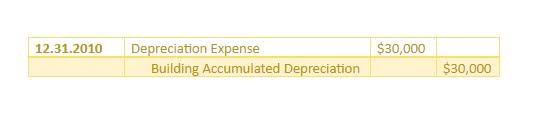
- The depreciation expense is based on a portion of the company’s tangible fixed assets deteriorating over time.
- Owners and investors also occasionally use EBITDA as a tool for comparing their business to competitors.
- It could be the interest on your loans or how you depreciated an asset that’s giving you a negative net income.
- EBITDA margin highlights a company’s operational profitability by excluding non-operational expenses like interest and taxes, offering a clearer view of core performance.
EBITDA: Meaning, Importance, Formula, Calculation & Example
By analyzing real companies like XYZ, ABC, and LMN, we gain valuable insights into their financial health and strategic decisions. Remember, context matters, and EBITDA margin is just one piece of the puzzle. EBITDA margin is not defined by the generally accepted accounting principles (GAAP) or the international financial reporting standards (IFRS), and there is no uniform or consistent way of calculating it. Different companies may use different methods or assumptions to calculate EBITDA and EBITDA margin, which may lead to confusion and inconsistency.
The Enterprise Value (EV) / EBITDA Multiple Calculation
EBITDA is used to indicate a company’s financial performance and profitability. Investors use EBITDA Margin to assess how well a company is controlling its operating costs relative to its revenue. It is particularly useful when comparing companies with different capital structures or tax situations, as it focuses on core operations without the distortion of non-operating expenses. EBITDA Margin is important because it gives investors and analysts a clear view of the profitability of a company’s core operations.
It allows for comparison across companies and industries by eliminating the effects of different capital structures and tax environments, providing a clearer picture of operational efficiency. As you can see, the results of the two formulas are slightly different. The net income method factors in interest and taxes, while the operating profit method focuses purely on the company’s core operations, resulting in a higher EBITDA.

Example Calculation

The EBITDA margin calculation is expressed as a percentage and is calculated by dividing EBITDA by total sales. This margin offers insights into how well a company’s operational activities are generating profits relative to its overall sales. A higher EBITDA margin indicates stronger operational efficiency and profitability. This ratio is useful because it focuses mainly on expenses that can be actively managed by a company directly such as reducing manufacturing costs or implementing automation. It also provides an effective way to compare companies of various sizes by showing how well a company is managing its operating costs regardless of size. EBITDA Margin is used to compare companies of different market capitalization and sectors because it breaks down operating profits in terms of percentage of revenue.
Using the provided assumptions, we can calculate the EBIT for each company by subtracting the COGS, OpEx, and D&A. Lastly, EBITDA margin is not recognized in generally accepted accounting principles – GAAP. Let us understand the differences between the EBITDA margin calculation and gross margin through the comparison below. While there are numerous advantages or significance of EBITDA margin equation, there are a few factors from the other end of the spectrum as well. Now that we understand the basics and intricacies of EBITDA margin calculation and implication, let us what is ebitda also touch upon the practicality of the concept through the examples below.

- We’ve found that it is helpful to provide detailed examples of calculations like EBITDA.
- While it could hint at a turnaround, it is crucial to dig deeper to understand the reasons behind the low margin before getting hopeful.
- CO— aims to bring you inspiration from leading respected experts.
- It can be especially useful when accounting for differences in capital structure and non-cash expenses.
- Therefore, a prospective buyer weighing up both businesses might see more promise in A over B.
EBITDA is a non-GAAP measure, thereby, there is no standardized, consistent set of rules dictating the specific items that belong in the formula. The percent differential between EBITDA and EBIT—i.e., the “spread”— is contingent on industry-specific factors, like capital intensity. When analysing EBITDA margin, it’s crucial to compare it against peers within the same industry. For example, a software company with a 60% EBITDA margin likely has low fixed assets variable costs and high scalability. A high EBITDA margin indicates that a company is good at converting a higher portion of revenue into profit.
Professional, fast response time and definitely gets the job done. Then we show how to calculate EBITDA margin and answer the question, “What is a good EBITDA margin? ” Next we report on average EBITDA margin by industry and explain how Assets America® can help.
The next section from the operating income line is the non-operating items section, where the only line item recorded is $5 million in interest expense. However, one exception is to perform a “back-of-the-envelope” analysis on a late-stage, mature company exhibiting stable operating performance and minimal growth (e.g., 3% to 5% YoY growth). The recognition of the D&A expense on the income statement is to abide by the accrual accounting reporting guidelines (U.S. GAAP) established by the Financial Accounting Standards Board (FASB). From net income, EBITDA can be calculated by adding back interest, taxes, depreciation, and amortization. The exclusion of depreciation and amortization in the EBITDA formula—and inclusion in EBIT—is the differentiating factor between the two metrics.